






That constant sound of water running in your bathroom? It’s not just annoying—it can waste a surprising amount of water (and money). The good news is that learning how to fix a running toilet is easier than you might think, and most problems can be solved in under 30 minutes.
In this guide, we’ll walk through how to fix a running toilet step by step, covering the most common causes and practical fixes you can do yourself—no plumbing experience required.
Why Is Your Toilet Running?
Before you fix anything, it helps to understand the cause. A running toilet usually means water is continuously flowing from the tank into the bowl.
Common Causes:
- Worn-out flapper
- Incorrect chain length
- Faulty fill valve
- Float set too high
- Loose or stuck handle
Once you identify the issue, fixing it becomes straightforward.
How to Fix a Running Toilet Step by Step
Let’s start with a simple process you can follow:
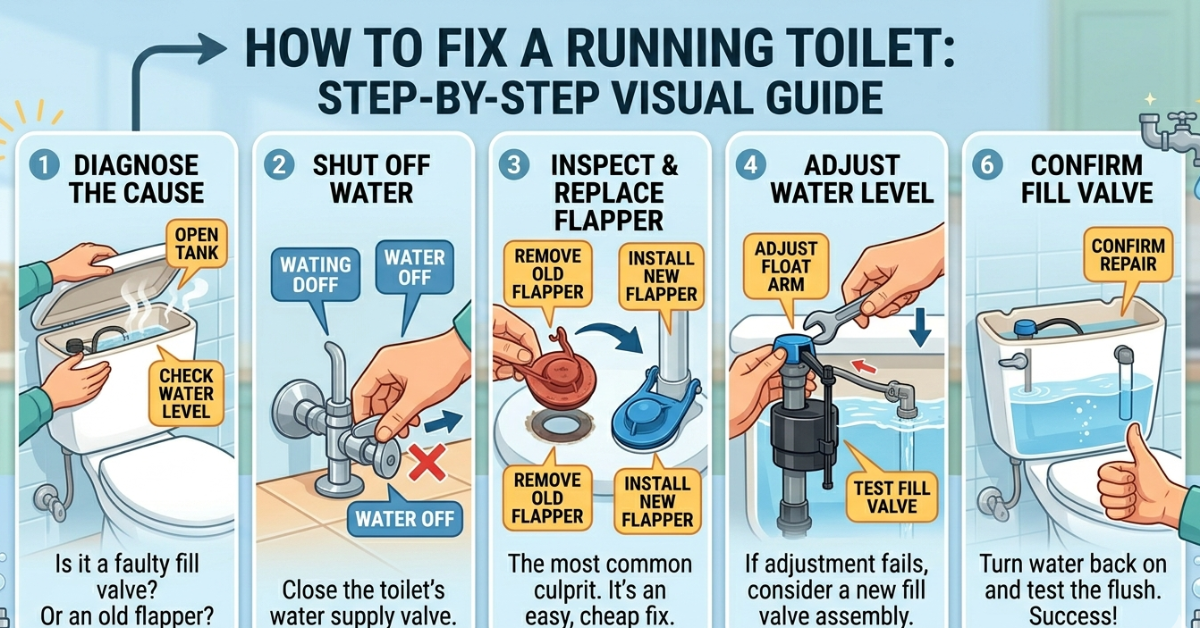
Step 1: Turn Off the Water Supply
Locate the valve behind your toilet and turn it clockwise to stop the water flow.
Step 2: Remove the Tank Lid
Carefully lift the lid and place it somewhere safe.
Step 3: Inspect the Components
Look at the flapper, chain, float, and fill valve to spot any obvious issues.
Fixing the Most Common Problems
1. How to Fix a Running Toilet Flapper
The flapper is a rubber seal that controls water flow from the tank.
Signs It’s the Problem:
- Water leaks into the bowl constantly
- Flapper looks worn or warped
Fix:
- Remove the old flapper
- Install a new one (they’re inexpensive)
- Ensure it seals properly
This is the most common solution when learning how to fix a running toilet flapper.
2. How to Fix a Running Toilet Chain
The chain connects the handle to the flapper.
Fix:
- If it’s too long, shorten it
- If it’s too tight, loosen it slightly
A poorly adjusted chain can prevent the flapper from sealing.
3. How to Fix a Running Toilet Fill Valve
The fill valve controls water refilling in the tank.
Signs:
- Water keeps running after the tank is full
Fix:
- Adjust the float level
- Replace the valve if it’s damaged
This step is key when dealing with how to fix a running toilet fill valve issues.
4. Adjusting the Float (Ball or Cup)
The float determines when the water stops filling.
Types:
- Ball float (older toilets)
- Cup float (modern toilets)
Fix:
- Lower the float to reduce water level
This applies whether you’re handling how to fix a running toilet with a ball float or how to fix a running toilet with a cup float.
5. Fixing the Flush Valve
If water keeps leaking, the flush valve may be worn.
Fix:
- Inspect for cracks or wear
- Replace if necessary
This helps solve problems related to how to fix a running toilet flush valve.
Special Cases and Variations
Button Flush Toilets
For how to fix a running toilet with a button flush, check:
- Button mechanism alignment
- Internal valve seals
Toilets Without a Flapper
If you’re dealing with how to repair a running toilet without a flapper, the issue is usually with a seal or valve system inside the tank.
Older Cistern Systems
For those searching how to repair a running toilet cistern, the same principles apply—focus on seals, floats, and valves.
Quick Troubleshooting Checklist
Before replacing parts, try this:
- Jiggle the handle (sometimes it’s just stuck)
- Check if the chain is tangled
- Ensure the flapper sits flat
- Adjust the water level
Even something as simple as how to repair a running toilet jiggle handle can solve the problem instantly.
Tools You Might Need
Most fixes require minimal tools:
- Adjustable wrench
- Replacement flapper or valve
- Gloves (optional)
Common Mistakes to Avoid
- Ignoring small leaks (they get worse)
- Overtightening parts
- Using incompatible replacement parts
- Skipping regular maintenance
FAQs About How to Fix a Running Toilet
1. How much water can a running toilet waste?
It can waste hundreds of liters per day if left unfixed.
2. Can I fix a running toilet without replacing parts?
Yes, sometimes adjusting the float or chain is enough.
3. How long does it take to fix a running toilet?
Most fixes take 15–30 minutes.
4. When should I call a plumber?
If the issue persists after replacing parts or if there’s a leak outside the tank.
5. Are all toilet parts universal?
Many are, but it’s best to match parts with your toilet model.
Conclusion
Learning how to fix a running toilet is a simple and valuable DIY skill that can save water, money, and frustration. Most issues—whether it’s the flapper, chain, or fill valve—are easy to identify and fix with basic tools.
Start with a quick inspection, follow the steps in this guide, and you’ll likely have your toilet running properly again in no time.