






Watching ski jumpers glide through the air almost feels unreal. For a few seconds, they seem to defy gravity—floating smoothly before landing with precision. So naturally, many people wonder: how is it possible for ski jumpers to stay in the air so long and how do they train for that?
The answer lies in a fascinating mix of physics, body control, and intense training. Let’s break it down in a way that actually makes sense.
The Science Behind Ski Jumping: It’s Not Just Falling
At first glance, it might look like ski jumpers are just falling slowly—but that’s not what’s happening.
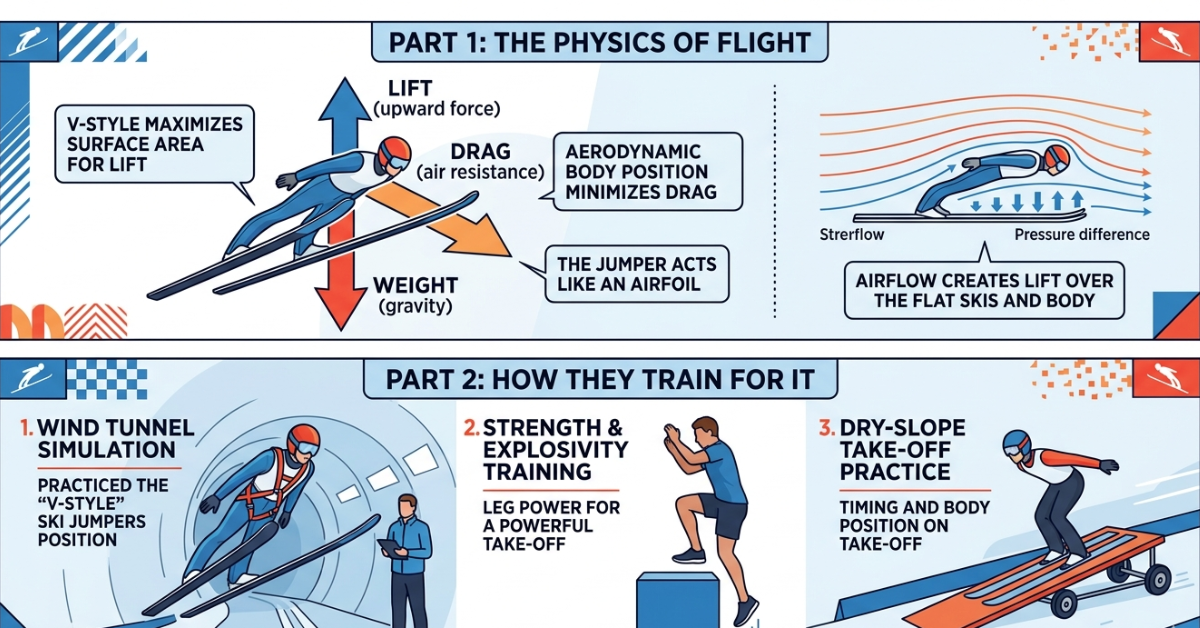
Key Forces at Work:
- Gravity: Pulls the jumper downward
- Lift: Pushes them upward (like an airplane wing)
- Drag: Air resistance that slows them down
The secret to staying airborne longer is maximizing lift while minimizing drag.
How Ski Jumpers Stay in the Air So Long
1. Aerodynamics: Turning the Body into a Wing
Ski jumpers position their bodies in a way that creates lift.
- They lean forward
- Keep their body flat and streamlined
- Spread their skis in a “V” shape
This technique, called the V-style, increases surface area and allows air to flow underneath, helping them glide instead of drop.
2. Speed from the Takeoff Ramp
Before leaving the ramp, jumpers build serious speed.
- Speeds can reach over 90 km/h (55 mph)
- The faster they go, the more lift they generate
That initial speed is crucial—it’s what powers the entire flight.
3. Perfect Takeoff Timing
The moment they leave the ramp matters a lot.
- Too early = loss of speed
- Too late = poor lift
Elite jumpers time their takeoff within fractions of a second to get the best trajectory.
4. Body Control in Mid-Air
Once airborne, it’s all about balance.
- Small adjustments affect direction and stability
- Arms are kept tight to reduce drag
- Head position helps control airflow
This level of control is why they can stay stable for so long.
How Do Ski Jumpers Train for That?
Now that you understand the physics, the next big question is: how do they train for it?
The answer: a combination of physical conditioning, technique drills, and mental preparation.
Physical Training: Strength Meets Precision
Ski jumping isn’t just about being lightweight—it requires explosive power.
Key Areas of Training:
- Leg strength: For powerful takeoff
- Core stability: For balance in the air
- Flexibility: For aerodynamic positioning
Common Exercises:
- Squats and lunges
- Plyometric jumps
- Balance training
Technique Training: Repetition and Refinement
Athletes spend years perfecting their form.
Training Methods:
- Practice jumps on smaller hills
- Video analysis to improve posture
- Simulated jumps indoors
Every detail—from ski angle to body tilt—is carefully refined.
Mental Training: Focus Under Pressure
Flying through the air at high speed isn’t just physical—it’s mental.
Mental Skills:
- Focus and concentration
- Confidence in technique
- Quick decision-making
Visualization is often used, where athletes mentally rehearse jumps before performing them.
Equipment Matters More Than You Think
Ski jumpers rely heavily on specialized gear.
Key Equipment:
- Long, wide skis for better lift
- Tight suits to reduce drag
- Lightweight helmets
Even small adjustments in equipment can affect performance significantly.
Training Year-Round (Even Without Snow)
Ski jumpers don’t stop training when winter ends.
Off-Season Training:
- Dry slope jumping (using artificial surfaces)
- Strength and conditioning programs
- Wind tunnel testing for aerodynamics
This ensures they stay sharp all year.
Visual Concept: Understanding the Flight
Imagine this simple breakdown:
- Accelerate down the ramp
- Launch with perfect timing
- Form a V-shape in the air
- Glide using lift and balance
- Land smoothly
That’s essentially the science behind what looks like “flying.”
FAQs About Ski Jumping
1. Do ski jumpers actually fly?
Not exactly—they glide using aerodynamic lift rather than true flight.
2. How far can ski jumpers go?
Elite athletes can jump over 200 meters depending on conditions.
3. Is ski jumping dangerous?
It carries risks, but strict training and safety measures reduce them.
4. Why do they lean forward so much?
It helps create lift and maintain aerodynamic efficiency.
5. How long does it take to become a professional?
It can take many years of training and competition experience.
Conclusion
So, how is it possible for ski jumpers to stay in the air so long and how do they train for that? It all comes down to mastering physics, perfecting technique, and committing to intense training.
From aerodynamic positioning to explosive strength and mental focus, every detail plays a role. What looks like effortless flight is actually the result of years of discipline and precision.
If you’ve ever watched ski jumping and felt amazed, now you know—it’s not magic. It’s science, skill, and a whole lot of practice.