





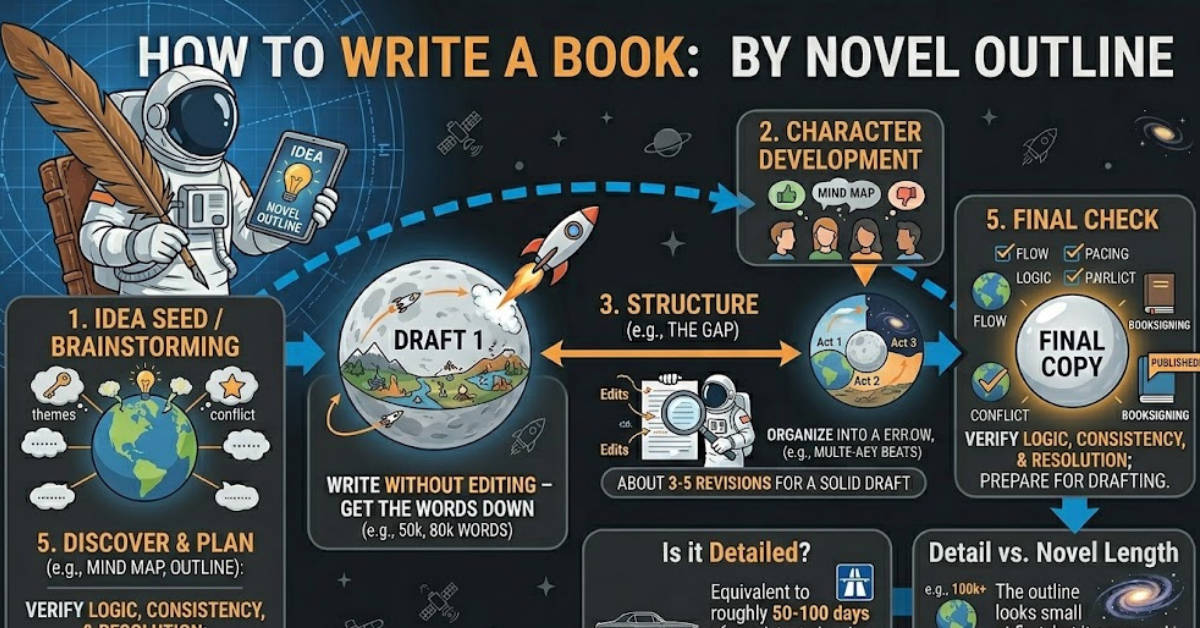

Every great novel starts with a solid plan—even if it doesn’t look like one at first. If you’ve ever felt stuck halfway through a story, learning how to write a novel outline can change everything. A good outline gives your ideas direction, keeps your plot on track, and makes the writing process far less overwhelming. In this guide, you’ll learn how to build an outline that works for you, whether you’re a beginner or an experienced writer.
What Is a Novel Outline?
A novel outline is a structured plan of your story before you start writing the full draft. Think of it as a roadmap that shows where your story begins, how it develops, and where it ends.
It typically includes:
- Main plot points
- Key characters
- Chapter breakdowns
- Major conflicts and resolutions
The goal isn’t to lock you in—it’s to give you clarity.
Why You Need a Novel Outline
You can write without an outline, but it often leads to confusion or unfinished drafts.
Benefits of outlining:
- Keeps your story organized
- Helps avoid plot holes
- Speeds up the writing process
- Makes editing easier later
If you’re serious about finishing your book, outlining is one of the smartest steps you can take.
How to Write a Novel Outline Step by Step
Let’s break the process down into simple, manageable steps.
1. Start With Your Core Idea
Every outline begins with a central concept.
Ask yourself:
- What is my story about?
- Who is the main character?
- What problem do they face?
Keep it simple. One strong idea is enough to build from.
2. Define Your Main Characters
Your story revolves around people, not just events.
Focus on:
- Protagonist (main character)
- Antagonist (opposing force)
- Supporting characters
Write short descriptions, including goals, motivations, and conflicts.
3. Map Out the Basic Plot Structure
Most novels follow a simple three-part structure:
Beginning
- Introduce characters and setting
- Present the main conflict
Middle
- Develop tension and obstacles
- Raise stakes and deepen conflict
End
- Resolve the conflict
- Show character growth or change
This structure forms the backbone of your outline.
4. Break It Into Chapters
Now divide your story into smaller sections.
Example approach:
- Opening scene
- Inciting incident
- Rising conflict
- Midpoint twist
- Climax
- Resolution
Each chapter should move the story forward in some way.
5. Add Key Details
Once your structure is in place, expand it with more detail.
Include:
- Important events
- Character decisions
- Emotional beats
This step transforms a basic plan into a working outline.
Simple Novel Outline Template
If you prefer a ready-made format, here’s a basic version you can follow:
- Story Idea: One or two sentences
- Main Characters: Brief descriptions
- Act 1: Setup and conflict introduction
- Act 2: Rising action and complications
- Act 3: Climax and resolution
- Chapter Breakdown: Bullet points for each chapter
This acts as a practical how to write a novel outline template you can adapt to your style.
Different Types of Novel Outlines
Not every writer outlines the same way. Here are a few popular methods:
Bullet Point Outline
- Simple and flexible
- Great for beginners
Detailed Outline
- Includes scenes, dialogue ideas, and descriptions
- Best for complex stories
Snowflake Method
- Starts with a simple idea and expands step by step
Choose the approach that feels natural to you.
Tips for Creating an Effective Outline
- Keep it flexible—your story can evolve
- Focus on major events, not every detail
- Update your outline as you write
- Don’t overcomplicate it
A good outline guides you without limiting your creativity.
Should You Use a Digital or Printable Outline?
Some writers prefer digital tools, while others like printed formats.
Digital outlines:
- Easy to edit and reorganize
- Ideal for long projects
Printable formats:
- Useful for visual thinkers
- Can be created as a how to write a novel outline pdf for easy reference
Choose what helps you stay organized and productive.
Common Mistakes to Avoid
- Making the outline too rigid
- Skipping character development
- Overloading with unnecessary details
- Not updating it as the story changes
Remember, your outline is a guide—not a rulebook.
FAQs
How detailed should a novel outline be?
It depends on your style. Some writers prefer simple bullet points, while others create detailed scene-by-scene plans.
Can I write a novel without an outline?
Yes, but it may take longer and lead to more revisions.
How long does it take to create an outline?
Anywhere from a few hours to several days, depending on the complexity of your story.
Should beginners use a novel outline?
Absolutely. It helps you stay focused and reduces confusion during writing.
Can I change my outline later?
Yes. Your outline should evolve as your story develops.
Conclusion
Learning how to write a novel outline is one of the most valuable skills a writer can develop. It gives your story structure, saves time, and helps you stay on track from start to finish.
The key is to keep it simple, flexible, and tailored to your process. Start with a basic idea, build your structure, and refine as you go. With a solid outline in place, writing your novel becomes not just possible—but much more enjoyable.