




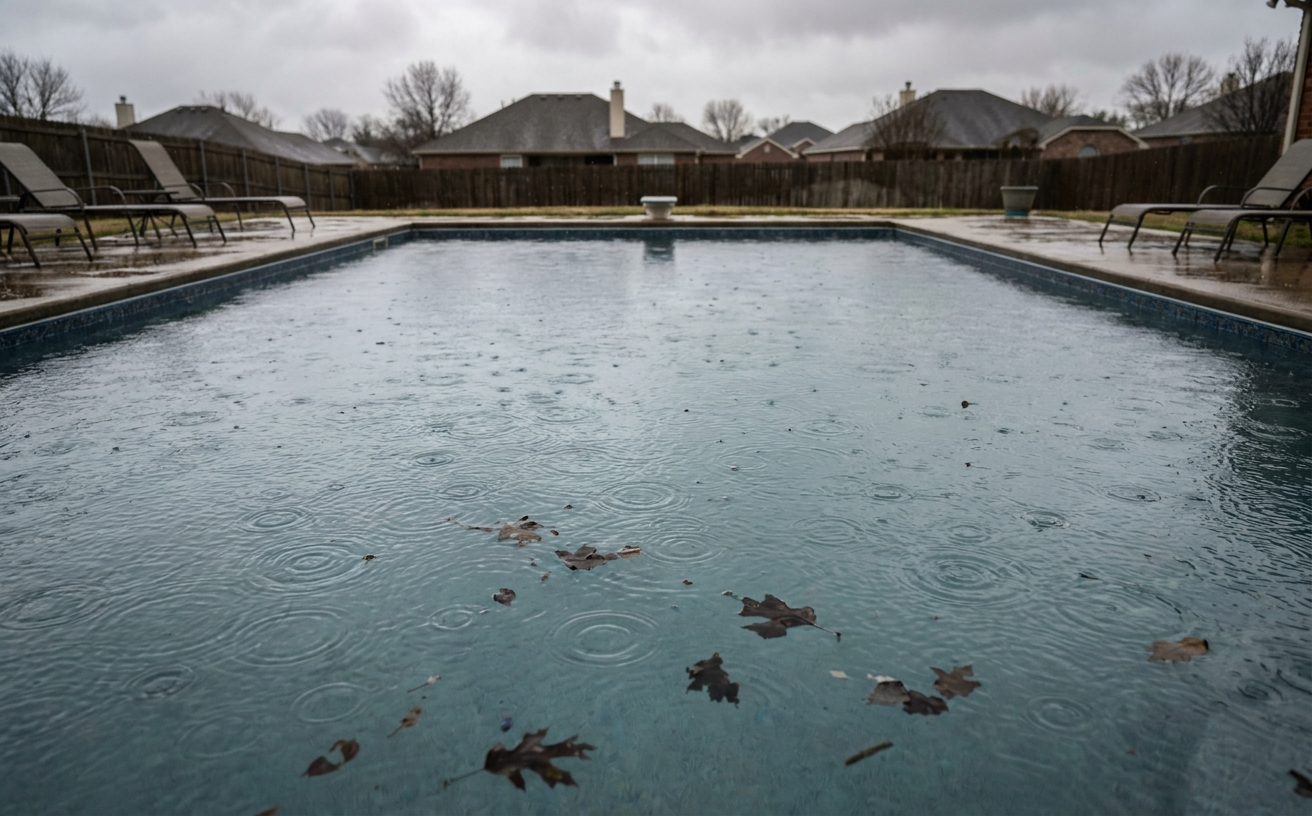

It happens every time a heavy rain passes through. You wake up the next morning, walk out to the pool, and there they are: dozens of earthworms floating on the surface or wriggling along the floor. The pool that was crystal clear yesterday now looks like a disaster scene, and you are left wondering how so many worms appeared overnight.
The phenomenon is common enough that every pool owner who lives near soil has experienced it. But few understand why it happens, and even fewer know how to prevent it from recurring. The explanation is straightforward once you know what drives earthworms to move during rain, and the prevention requires surprisingly little effort.
Why Earthworms Surface During Rain
Earthworms breathe through their skin, which must remain moist for oxygen exchange to occur. During dry periods, they stay deep underground where the soil retains moisture. When rain saturates the ground, the soil pores fill with water and the oxygen supply drops. Earthworms surface to avoid drowning.
This is a survival behavior, not a navigation error. The worms are not trying to reach your pool. They are trying to reach air. The problem is that once they surface on wet concrete or paving, they lose their bearings. A pool deck covered in rainwater looks like a moist surface they can traverse, so they crawl across it. The edge of the pool also looks like a moist boundary. One slip, and they are in the water.
Once in the pool, earthworms cannot escape. The pool wall is too smooth and too vertical for them to climb. Chlorinated water irritates their skin immediately. They die within minutes and begin decomposing, which creates a mess that is both unsightly and chemically problematic.
What Happens to Your Water Chemistry
A single earthworm decomposing in your pool has negligible impact. But twenty or thirty worms, which is common after a strong storm, create a measurable organic load that affects your water balance.
Decomposing worms release proteins and amino acids that consume free chlorine. If your chlorine level was already on the low end, a significant worm event can drop it below the minimum needed to keep bacteria and algae in check. Within a day, the water can turn hazy or start showing early algae growth.
The organic decomposition also releases ammonia compounds that interact with chlorine to form chloramines. This is what causes the sharp chemical smell that people mistakenly associate with too much chlorine. In reality, it means your chlorine is being overwhelmed by contaminants and is losing the fight.
Removing Worms Quickly
Speed matters. The faster you remove the worms, the less impact they have on your water chemistry. Fresh worms that have just entered the pool can be scooped out with a leaf net before they begin decomposing, which largely eliminates the chemical impact.
Worms that have been in the water for more than a few hours start breaking down and become harder to net cleanly. They fragment when you try to scoop them, leaving organic residue in the water. At this stage, you need to vacuum the debris from the floor and shock the pool to restore chlorine levels.
If you frequently deal with worms in pool after rain, keeping a leaf net by the pool and checking the water first thing in the morning after any storm is the single most effective habit you can develop.
Preventing Worms from Reaching the Pool
The most effective prevention is physical. A barrier between the soil and the pool deck eliminates the path worms use to reach the water.
- Install a raised edge or small lip around the pool deck that worms cannot crawl over
- Create a gravel or crushed-stone border between lawn areas and the deck to discourage worm movement
- Keep the pool deck as dry as possible by ensuring proper drainage away from the pool
- Use a pool cover during rain events if the forecast calls for heavy precipitation
The gravel border is particularly effective. Earthworms avoid dry, sharp surfaces because the abrasion damages their skin. A twelve-inch strip of crushed stone between the lawn and the pool deck creates a zone that most worms will not cross, even during heavy rain when they are actively surfacing.
Improving deck drainage also helps. If rainwater pools on the deck surface near the pool edge, worms will follow the moisture straight to the water. Ensuring the deck slopes away from the pool and that there are no low spots where water collects removes the moist pathway that guides worms to the pool.
Chemical Deterrents: Do They Work?
Some pool owners sprinkle diatomaceous earth or salt along the pool edge to create a barrier that irritates worm skin. These methods work temporarily, but rain dissolves or washes away the barrier, which is exactly when you need it most. Applying a fresh barrier before every rainstorm is impractical for most people.
Copper-based lawn treatments can reduce earthworm populations near the pool, but this approach has significant downsides. Copper is toxic to aquatic life, and any runoff that reaches the pool interferes with water chemistry. It also kills beneficial soil organisms that keep your lawn healthy. The trade-off is not worth it for most homeowners.
Physical barriers remain more reliable and more environmentally sound than chemical approaches. They work regardless of rain intensity and they do not introduce foreign substances into your pool or your soil.
The Robotic Cleaner Advantage
If you already own a robotic pool cleaner, it handles the aftermath of a worm event automatically. Run the cleaner the morning after a storm, and it will collect both live and decomposing worms from the floor and filter them out of the water.
The fine filter cartridges on most robotic cleaners capture the organic residue that manual netting leaves behind. This is one of those situations where a robotic cleaner does not just save time, it actually produces a cleaner result than manual removal, because it captures the microscopic debris that drives chloramine formation.
After running the cleaner, test your water and add chlorine if needed. Most worm events require a mild shock to restore free chlorine levels and oxidize the remaining organic compounds. A standard dose is usually sufficient, since the bulk of the organic load has been physically removed by the cleaner.
Making Peace with the Rain
Earthworms in the pool are annoying but not dangerous. They are a sign that your soil is healthy and productive, which is a good thing for your yard even if it is inconvenient for your pool. The combination of physical barriers, quick removal, and a robotic cleaner for thorough cleanup turns a recurring nuisance into a manageable routine.
Storms will keep coming. Worms will keep surfacing. But your pool does not have to suffer every time the sky opens up. A few preventive measures and a consistent post-rain cleanup habit keep the water clear regardless of what crawls across the deck overnight.