






Poetry has a way of saying what ordinary sentences can’t. Whether you want to express love, tell a story, or simply play with words, learning how to write a poem opens up a creative world that’s both personal and powerful. The best part? You don’t need to be an expert to start. With a few simple techniques and a bit of practice, anyone can write meaningful poetry.
What Is a Poem?
Before diving in, it helps to understand what makes a poem different from other writing.
A poem is:
- A creative expression of thoughts or emotions
- Often structured with rhythm, imagery, or rhyme
- Flexible—there are no strict rules you must follow
From short verses to long narratives, poetry gives you freedom to write in your own style.
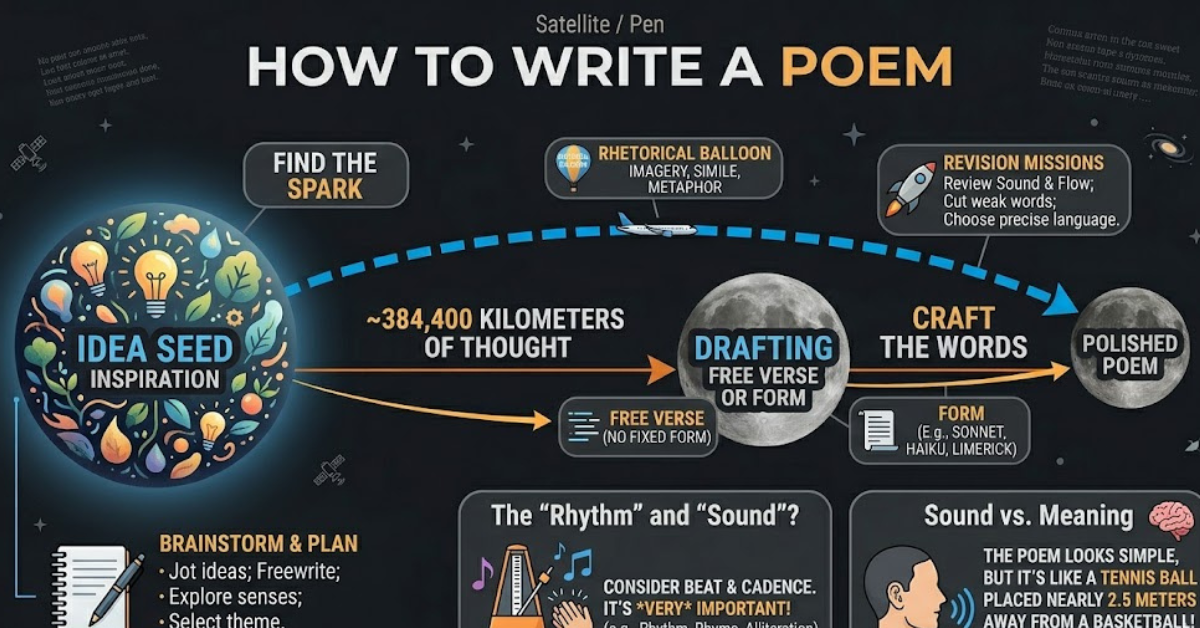
How to Write a Poem Step by Step
If you’re unsure where to begin, follow this simple process.
1. Choose a Topic or Idea
Start with something that matters to you:
- A person you admire
- A memory or experience
- A feeling like love, sadness, or hope
If you’re exploring how to write a poem about someone, focus on details that make them unique.
2. Decide on a Style
Poems come in many forms:
- Free verse (no strict structure)
- Rhyming poems
- Haiku or short forms
Beginners often find free verse easiest because it allows more flexibility.
3. Write Your First Lines
Don’t overthink it. Just start writing.
Tips:
- Use simple language
- Focus on imagery (what you see, feel, hear)
- Let your thoughts flow naturally
If you’re learning how to write a poem for beginners, this step is all about getting words on the page.
4. Add Emotion and Imagery
Strong poems make readers feel something.
Instead of saying:
- “I was sad”
Try:
- “The room felt empty, like echoes had nowhere to go”
This technique brings your poem to life.
5. Edit and Refine
Once your draft is done:
- Remove unnecessary words
- Improve flow and rhythm
- Check for clarity
Great poetry often comes from careful revision.
How to Write a Poem About Love or Someone Special
Writing about emotions can feel intense, but it’s also where poetry shines.
Focus on:
- Specific memories
- Personal details
- Honest feelings
Whether it’s how to write a poem about love or about someone you care about, authenticity matters more than fancy words.
Simple Poem Example
Here’s a short example to inspire you:
The sun slips quietly away,
Painting gold across the day,
And in that fading, gentle light,
I find my thoughts begin to write.
Looking at how to write a poem examples like this can help you understand rhythm and flow.
Writing Poems for School or Assignments
If you’re working on a school task, there may be extra requirements.
Common guidelines:
- Follow a specific format or theme
- Include a title
- Pay attention to structure
For essays, knowing how to write a poem title in an essay usually means italicizing or quoting it, depending on the style guide.
Tips and Techniques to Improve Your Poetry
Here are some practical ideas to strengthen your writing:
- Read other poems for inspiration
- Write regularly, even short pieces
- Experiment with different styles
- Use metaphors and similes
- Keep a notebook for ideas
These how to write a poem tips and techniques will help you grow over time.
Can You Use AI to Help Write a Poem?
Modern tools can assist with brainstorming ideas or refining your work.
- AI can suggest themes or word choices
- It can help improve clarity
- But your voice should remain the focus
Think of it as a помощник, not a replacement for your creativity.
Common Mistakes to Avoid
- Trying to sound overly complicated
- Forcing rhymes that don’t fit
- Ignoring emotion or meaning
- Giving up too quickly
Poetry is about expression, not perfection.
FAQs
How do I start writing a poem?
Begin with a simple idea or emotion, then write freely without worrying about structure.
Do poems have to rhyme?
No. Many modern poems use free verse without any rhyme.
How long should a poem be?
There’s no fixed length. It can be as short or long as needed to express your idea.
Can beginners write good poems?
Absolutely. Practice and honesty matter more than experience.
What is the easiest type of poem to write?
Free verse is often the easiest because it doesn’t follow strict rules.
Conclusion
Learning how to write a poem is really about learning how to express yourself. There’s no single “right” way to do it—just your way. Start with a simple idea, write from the heart, and refine your words as you go.
If you keep practicing and experimenting, you’ll find your own voice and style. So grab a notebook, write your first few lines, and see where your creativity takes you.