





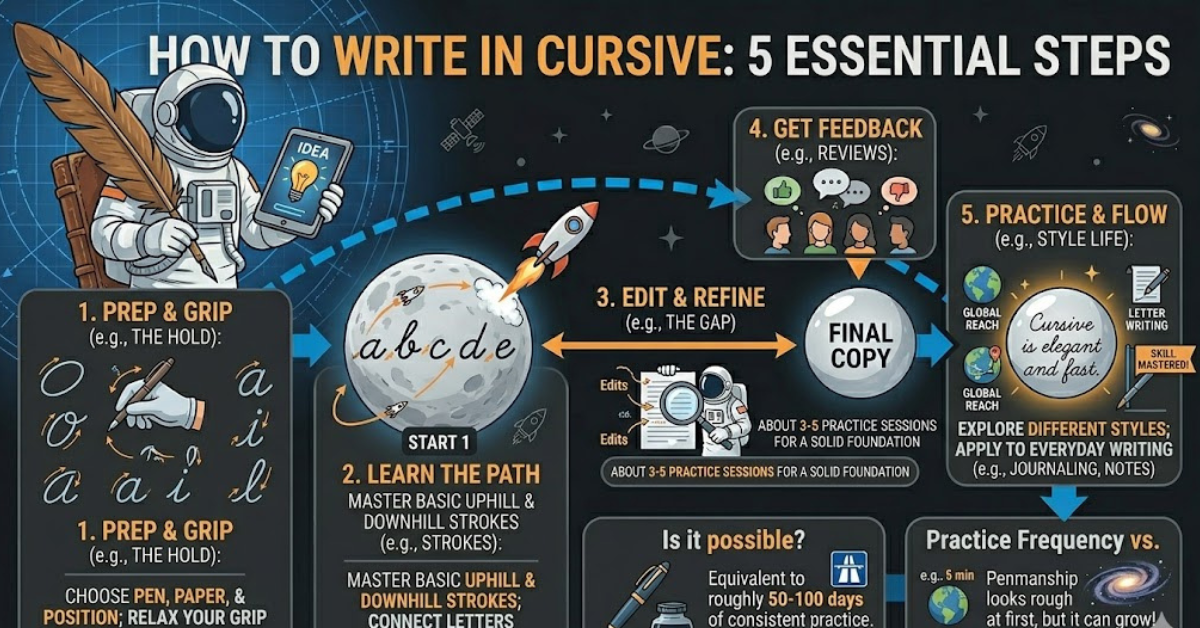

In a world full of keyboards and touchscreens, cursive writing still has a timeless charm. If you’ve ever wanted to improve your handwriting or simply learn a new skill, understanding how to write in cursive is a great place to start. It’s not as difficult as it looks—once you learn the basic strokes and patterns, cursive becomes smooth, fast, and even relaxing.
What Is Cursive Writing?
Cursive is a style of handwriting where letters are connected in a flowing manner. Unlike print writing, cursive emphasizes continuous motion, making it quicker once you get used to it.
Key features:
- Letters are joined together
- Smooth, curved strokes
- Consistent slant and spacing
This style is often used for signatures, personal notes, and decorative writing.
Why Learn Cursive Writing?
Learning cursive offers more benefits than you might expect.
- Improves hand coordination
- Helps with memory and learning
- Speeds up writing over time
- Adds a personal touch to your handwriting
Whether you’re a student or an adult, it’s never too late to start.
How to Write in Cursive Step by Step
If you’re new to this, follow a simple process to build confidence.
1. Start With Basic Strokes
Before forming letters, practice:
- Upward strokes
- Downward strokes
- Loops and curves
These shapes form the foundation of all cursive letters.
2. Learn Lowercase Letters First
Lowercase letters are easier and used more often.
Focus on:
- Letters like a, c, e, l (simple curves)
- Then move to b, h, k (taller loops)
- Practice connecting them into short words
Mastering how to write in cursive lowercase builds a strong base.
3. Move to Uppercase Letters
Capital letters are more decorative and sometimes more complex.
- Practice one letter at a time
- Keep strokes smooth and controlled
- Don’t rush the process
4. Practice the Full Alphabet
Once comfortable, write the entire cursive alphabet from A to Z.
- Repeat daily for better muscle memory
- Focus on consistency, not speed
This step is essential for anyone exploring how to write in cursive alphabet.
5. Connect Letters Into Words
Cursive becomes natural when letters flow together.
Start with:
- Simple words like “cat,” “sun,” or “book”
- Gradually move to longer sentences
Tips for Beginners
If you’re just starting out, these tips will help:
- Write slowly and focus on form
- Use lined paper to maintain alignment
- Keep your pen pressure light
- Practice daily, even for 10–15 minutes
These small habits make a big difference over time.
How to Learn Cursive for Kids and Adults
Cursive isn’t just for children—it’s a valuable skill at any age.
For kids:
- Use tracing sheets and guided practice
- Turn practice into a fun activity
For adults:
- Be patient with progress
- Focus on neatness first, speed later
Anyone can succeed with consistent effort.
Tools That Make Learning Easier
Modern tools can support your learning process.
Helpful options:
- Printable practice sheets
- Writing apps for guided tracing
- Digital documents for structured practice
Some people also explore how to practice using word processors or handwriting tools to improve consistency.
Common Mistakes to Avoid
- Writing too fast too soon
- Ignoring letter spacing
- Pressing too hard on the pen
- Skipping basic stroke practice
Avoiding these mistakes will speed up your progress.
Practice Ideas to Improve Faster
- Copy short paragraphs daily
- Write your name and signature in cursive
- Keep a handwriting journal
- Practice with worksheets regularly
Consistency is more important than long practice sessions.
FAQs
How long does it take to learn cursive writing?
Most beginners see improvement within a few weeks of daily practice.
Is cursive writing hard to learn?
Not really. It just requires patience and consistent practice.
Should I learn cursive as an adult?
Yes. It improves handwriting and can even be relaxing.
What is the easiest way to start learning cursive?
Begin with basic strokes, then move to lowercase letters and simple words.
Do I need special tools to practice cursive?
No. A pen and lined paper are enough, though worksheets can help.
Conclusion
Learning how to write in cursive is a skill that combines creativity, discipline, and practice. It may feel challenging at first, but with the right approach, it quickly becomes smooth and enjoyable.
Start with simple strokes, practice regularly, and build your confidence step by step. Over time, you’ll develop a handwriting style that’s not only functional but uniquely yours.